
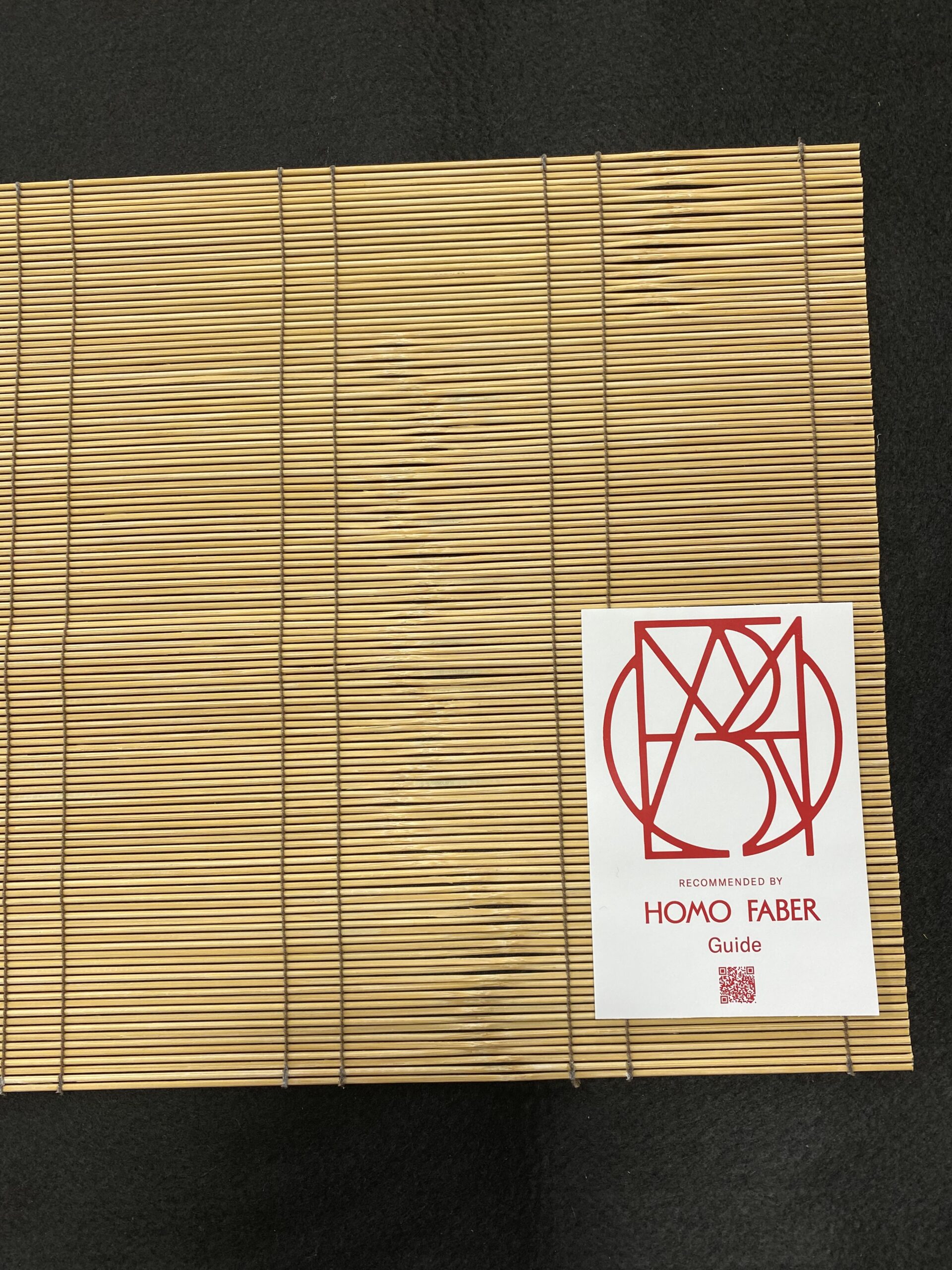
A Symbol of Global Excellence: Displaying Our Official Homo Faber Guide Emblem

Body Copy:

We are honored to share that we have received an official Homo Faber Guide emblem from the Michelangelo Foundation, based in Geneva, Switzerland.

The Homo Faber Guide is an international digital platform dedicated to preserving and promoting the finest examples of traditional craftsmanship and artisanal excellence. Being featured in this prestigious guide—a recognition granted only to workshops that meet rigorous international standards—is a testament to our dedication to our craft.

A Badge of Trust

While we have been featured in the guide for some time, receiving this official emblem serves as a proud new milestone. By displaying this emblem at our workshop and on our products, we are signaling to designers, architects, and collectors from around the world that our work stands as a mark of world-class quality and integrity.

Connecting Globally Through Craft

The emblem features a QR code, providing a seamless gateway for our visitors to explore our dedicated profile on the Homo Faber Guide.

Whether you are a local visitor or an international partner, this emblem represents our ongoing commitment to bridging Japanese bamboo traditions with the global design community. We look forward to building stronger connections with those who value the artistry of the hand and the beauty of sustainable, authentic materials.

When you visit our workshop, please keep an eye out for this mark—it is a symbol of our history, our standards, and our future.

[Link: View Our Profile on the Homo Faber Guide] https://www.homofaber.com/en/artisans/shikada-sangyo-tatami-making-japan
Beyond Tradition: Our Innovation in “Triple-Reverse” Weaving to Master Bamboo Stability

In the world of traditional Japanese Sudare (bamboo blinds), one challenge has always remained: the natural tendency of bamboo to warp over time due to environmental changes. For generations, our artisans have worked to overcome this, balancing the beauty of a natural material with the need for structural stability.

Today, we are excited to introduce our latest innovation: a new weaving technique that challenges conventional design.

Moving Beyond the “Single-Return”

Traditionally, bamboo blinds are crafted using a “single-return” method, where single bamboo slats are woven in an alternating front-and-back pattern. While this creates a classic, beautiful aesthetic, it often struggles to fully control the inherent tension of the material.

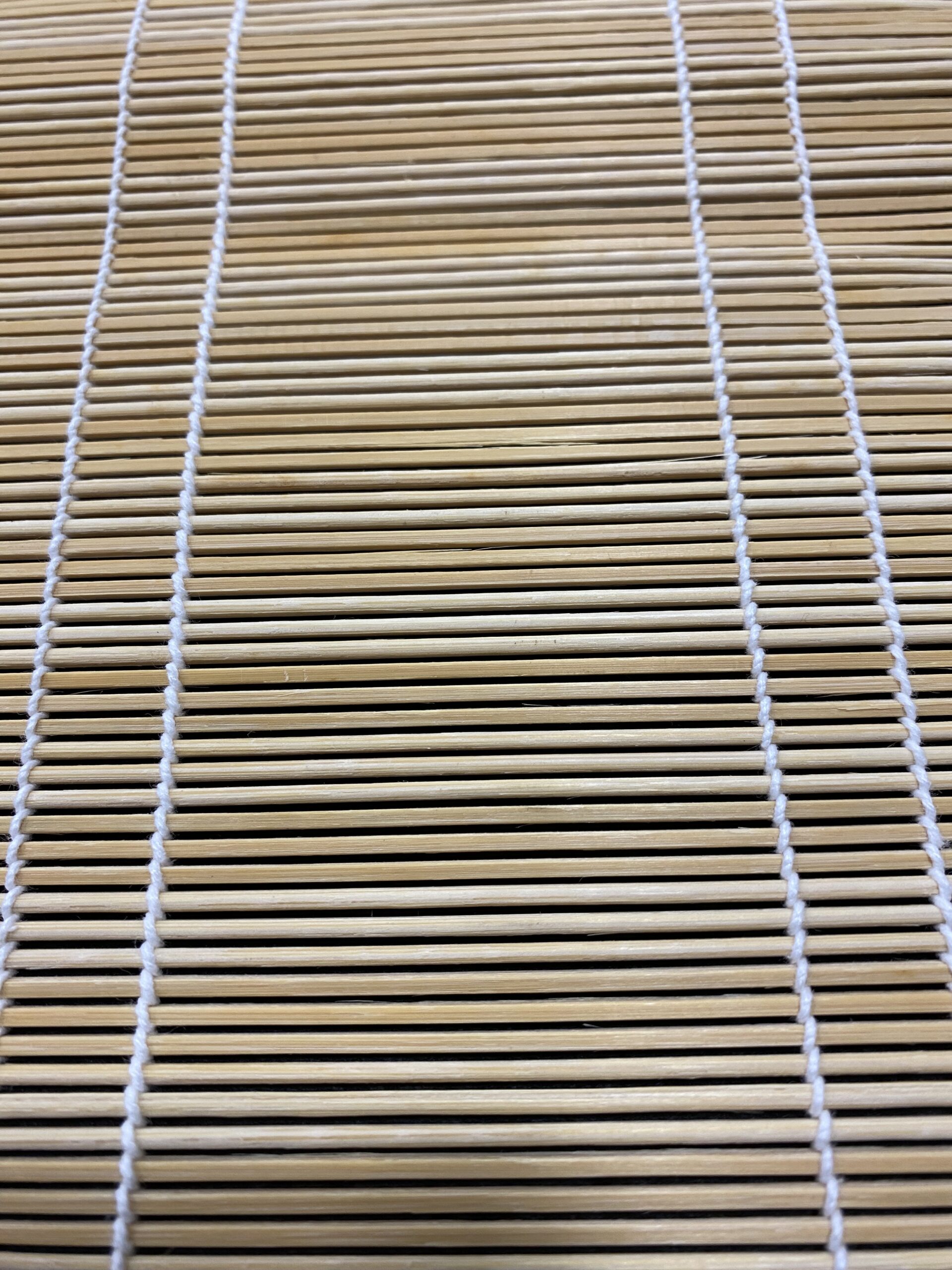
Our new approach takes a bold step forward: a “Triple-Reverse” weave, where we interlock three bamboo slats at a time, alternating them front-to-back.

Why “Triple-Reverse”?

This new structural configuration offers two significant advantages:

  1. Superior Stability and a Flat Finish: By weaving in sets of three, the structural forces of the bamboo fibers counteract one another. This drastically reduces warping, allowing the product to maintain a perfectly flat, elegant surface for much longer than traditional methods.

  2. A Natural, Sophisticated Gradient: Because the front (skin) and back (core) of a bamboo slat have distinct natural tones, this triple-weave creates a subtle, beautiful color gradient. It is not an artificial design, but rather a reflection of the bamboo’s own organic character, resulting in a depth and texture that is visually captivating.

The Evolution of Craftsmanship

At our workshop, we believe that “preserving tradition” does not mean simply repeating the past. Instead, it means evolving our techniques to ensure our crafts are more functional, durable, and beautiful for modern living.

This “Triple-Reverse” technique represents our commitment to pushing the boundaries of what is possible with sustainable materials. We are thrilled to see how this innovation will elevate interior spaces globally.

Our research into new textures and structures never stops. We look forward to sharing more of our journey with you soon.